
The short answer
Older Edmonton homes can contain asbestos in vermiculite attic insulation, ceilings, floor tiles and duct wrap, and occasionally an old heating oil tank. Most of it is low-risk if left alone. A home inspection only flags what it can see, so build time into your offer for specialist testing before your conditions come off.
Key takeaways
- Vermiculite sold as Zonolite from the 1920s to 1990 may contain asbestos. Health Canada says don't disturb it and don't sample it yourself.
- Asbestos also shows up in textured ceilings, old floor tiles, duct wrap and drywall mud in homes built before 1990.
- Old heating oil tanks turn up less often but do turn up. Look for fill and vent pipes, and copper lines through the foundation.
- A licensed home inspector flags suspect materials but won't test them. Testing takes a specialist.
- Give yourself a long enough inspection condition to get follow-up testing done before you firm up.
Three things worth knowing before you buy an older house
If you’re buying a house built before about 1990 in Edmonton, there’s a fair chance something in it was made with asbestos. In a much older house, you may also find loose vermiculite in the attic, and once in a while there’s an old heating oil tank nobody mentioned.
None of these is a reason to walk away from a house on its own. Each one is a reason to slow down, find out what’s actually there, and write the offer so you have time to do that. Most of the trouble I’ve seen with them comes from a buyer finding out after possession, when there’s no condition left to lean on.
What is vermiculite, and why does it matter?
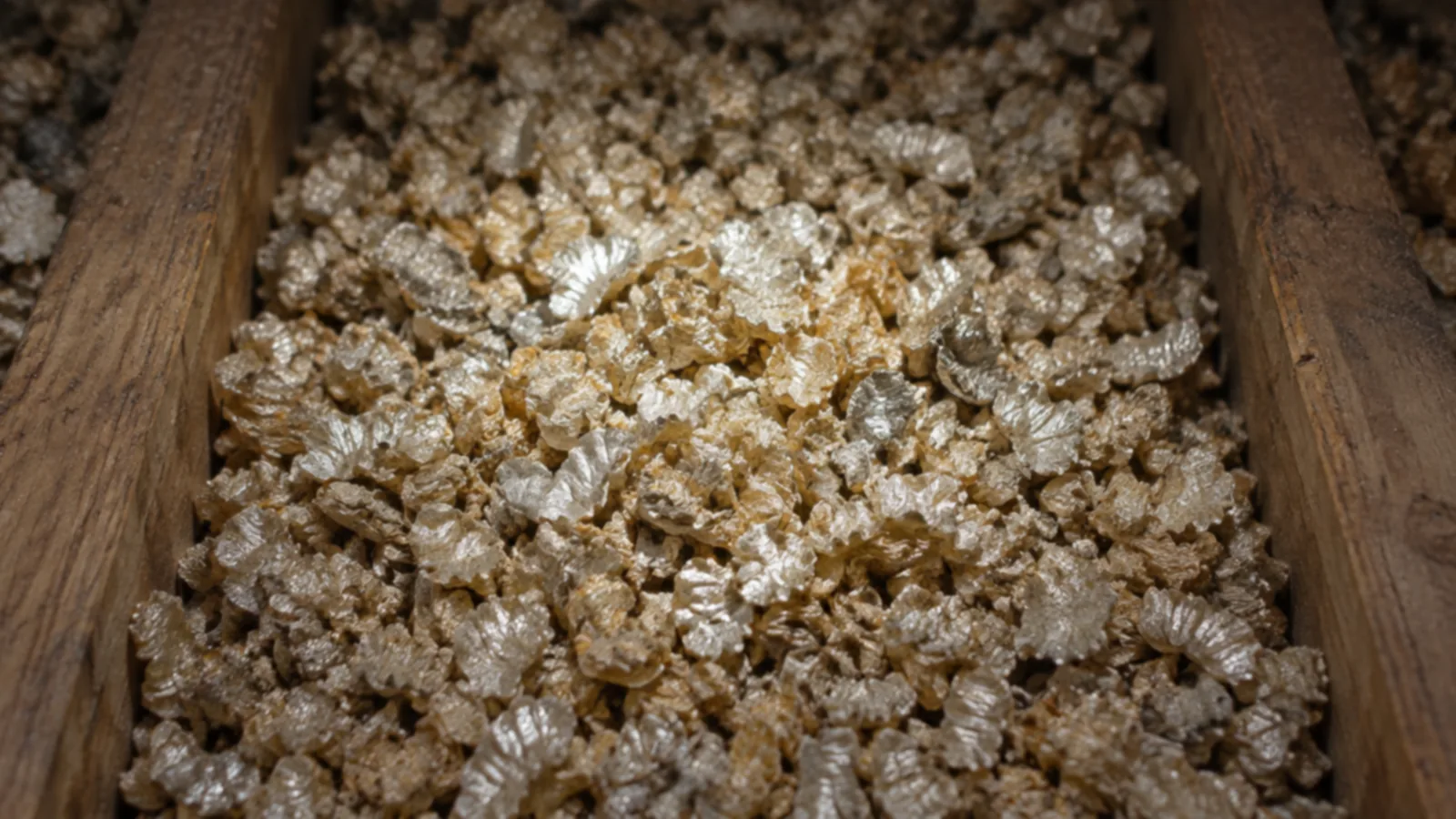
Vermiculite is a loose, pebbly insulation, usually greyish-brown or gold with a shiny look. It shows up poured between the attic joists, and sometimes inside walls. You’ll see it in some of Edmonton’s older homes, mostly in attics that were topped up decades ago.
The concern is one product. Much of the vermiculite sold in Canada from the 1920s to 1990 came from a mine in Libby, Montana, and was sold as Zonolite Attic Insulation. Ore from that mine was contaminated with asbestos. Not all vermiculite contains asbestos, but you can’t tell by looking at it.
Health Canada’s advice is plain: if it’s sealed off and you don’t disturb it, the risk is very low. The risk comes when it’s disturbed, during renovation, rewiring or anyone crawling around the attic. Health Canada also says not to take a sample yourself. A qualified professional should do it.
If testing confirms asbestos and you plan to work in the attic, removal is a job for an abatement contractor. The cost depends on the size of the attic and how it’s reached, so get a quote before you firm up, not after.
Where else does asbestos show up in an older home?
Vermiculite is the one people have heard of, but it isn’t the only place asbestos turns up. Alberta Health Services lists drywall joint compound, ceiling tiles, insulation, floor tiles and textured wall and ceiling finishes among the materials that used it before 1990. In practice, the ones I see come up most are:
- Textured "popcorn" ceilings
- Older vinyl floor tiles, often hiding under newer flooring
- The wrap on old heating ducts and pipes in the basement
- Drywall mud in houses from the 1950s to the 1980s
Like vermiculite, most of it is low-risk when it’s left alone and in good shape. The time to test is before you sand, scrape, cut or tear out anything. AHS recommends hiring an environmental consultant to test suspect materials before a renovation, and that’s what I tell buyers who are planning one.
Contractors in Alberta who disturb asbestos are covered by the province’s occupational health and safety rules, and the Alberta Asbestos Abatement Manual sets out how the work should be done. If you’re hiring someone to take out a ceiling in a 1965 bungalow, ask them how they’ll handle it. A contractor who hasn’t thought about it is telling you something.
What about old oil tanks?
Oil tanks come up less often than the other two, but they do come up. Some older homes were heated with oil at one point, and when they converted, the tank wasn’t always taken out. It might still be in the basement, or buried in the yard.
Signs to look for:
- A pipe sticking out of the ground or the side of the house that doesn’t go anywhere obvious. Fill pipes and vent pipes are the usual giveaway.
- Small copper lines coming through the basement wall or floor.
- A patched hole in the foundation where a line used to come in.
- A cut-off pipe in the yard near the house, or an odd dip in the lawn.
The risk with a buried tank is a leak. Fuel in the soil is expensive to clean up, and the cost usually falls on whoever owns the land when it’s found. Some insurers and lenders will want to know the tank is gone, and that it was taken out properly. Alberta’s fire code sets rules for removing tanks that are out of service, and the City of Edmonton applies them.
If you suspect a tank, ask the seller directly and in writing. Then have a qualified contractor confirm it. If it’s there, the usual fix is removal with paperwork showing it was done properly and whether the soil was clean.
What will a home inspection find, and what won’t it?
A home inspection is visual and non-invasive. In Alberta, home inspectors and inspection businesses have to be licensed by the province, and a good one will flag what they can see: "insulation that appears to be vermiculite", textured ceilings, old duct wrap, a suspicious pipe in the yard.
What they won’t do:
- Take samples or send anything to a lab
- Open walls, lift flooring or move insulation
- Scan the yard for a buried tank
- Tell you whether something contains asbestos
So a general inspection tells you where to look. If something is flagged, the next step is a specialist: an environmental consultant for asbestos and vermiculite, or a tank contractor for a suspected oil tank. Some of them can usually come out inside a typical condition period if you book quickly.
How do I write the offer to protect myself?
The goal is time and information before you commit. On an older house, I usually suggest:
- An inspection condition long enough for follow-up testing. If the inspector flags something, you need days, not hours, to get a consultant in.
- Asking for records. Has the attic insulation been tested or replaced? Was there ever an oil tank, and if so, is there paperwork showing it was removed? Sellers often have more than they think.
- Room to renegotiate. If testing comes back positive, you can ask for a price adjustment, ask the seller to deal with it before possession, or walk away within your condition. A holdback is another option, arranged through the lawyers.
Here’s a hypothetical. You’re buying a 1950s bungalow and the inspector notes vermiculite in the attic. You use the rest of your condition period to have it tested. If it comes back clean, you carry on. If it contains asbestos and you plan to finish the attic, you get an abatement quote and go back to the seller with it. Either way, you made the decision before your money was committed.
Questions to ask the seller
Ask these through your REALTOR® so the answers are in writing:
- Has the attic insulation ever been tested, topped up or replaced? Who did it, and is there an invoice?
- Has any material in the house been tested for asbestos? Can we see the results?
- Was the house ever heated with oil? If so, where was the tank, and is there a record of its removal?
- Which renovations had permits, and which didn’t? Older renovations are where asbestos most often gets disturbed and left behind.
- Has your insurer ever asked about any of this?
"I don’t know" is a fair answer from a seller who inherited the house. It just tells you how much testing you’ll want to do yourself.
Can I just live with it?
Often, yes. Plenty of people live for years in houses with vermiculite sealed in the attic or asbestos floor tiles under newer flooring. Health Canada’s own guidance is that leaving undisturbed vermiculite alone is a reasonable choice, as long as nobody is working in that space.
What changes the answer is your plan for the house. If you want to finish the attic, take out walls, redo the basement or upgrade the wiring, the material gets disturbed and you need to deal with it first. That’s why I’d rather a buyer know before they firm up. The cost of removal belongs in the renovation budget, not as a surprise halfway through it.
If you’re selling an older home
If you know something is there, tell your REALTOR® before you list and get advice from your lawyer on what to disclose. Buyers find these things during inspections anyway, and a known issue with a test result or a removal invoice attached is far easier to sell than a surprise. A pre-listing inspection is a good way to find out first.
The rest of the older-home series
Asbestos and vermiculite often come up in the same houses as the other things that worry buyers of older homes. If you’re looking at a character home, read these too:
Edmonton’s market right now
513 of Edmonton's 5,329 active listings were built in 1960 or earlier — the stock most people mean by “character home”. The city-wide median list price is $424,900, or about $296 per square foot.
| Price band | Listings | Share |
|---|---|---|
| Under $300,000 | 1,674 | 31% |
| $300,000 – $500,000 | 1,849 | 35% |
| $500,000 – $750,000 | 1,251 | 23% |
| $750,000 – $1M | 293 | 5% |
| $1M and up | 262 | 5% |
Source: Real Living’s CREA DDF® feed, active Edmonton residential listings as of 24 November 2026. Figures refresh several times a day; extreme outliers are excluded so a median reflects the real market. Search every listing.

Ryan McCann
Ryan McCann is an Edmonton REALTOR® licensed since 2003, with more than 2,200 homes sold. His work spans every Edmonton neighbourhood and property type, bringing deep local market knowledge and practical guidance to buying or selling a home in Edmonton.
He has rebuilt a 1912 home from the ground up, and works regularly with buyers and sellers of Edmonton’s pre-war character housing.
Contact Ryan today at 780-964-8445 to talk through your next step.
Sources
Health Canada, Vermiculite insulation containing amphibole asbestos (archived guidance) — bac-lac.wayback.archive-it.org
Canadian Centre for Occupational Health and Safety, Vermiculite insulation containing asbestos — ccohs.gc.ca
Alberta Health Services, Asbestos information for homeowners — albertahealthservices.ca
Government of Alberta, Alberta Asbestos Abatement Manual — open.alberta.ca
City of Edmonton, Tank closure report (removal under the National Fire Code, 2019 Alberta Edition) — edmonton.ca
Government of Alberta, Home inspector licence — alberta.ca
This is general information, not a substitute for testing by a qualified professional. Condition varies house by house.
Frequently asked questions
Is vermiculite insulation dangerous?
It can be. Vermiculite sold as Zonolite in Canada from the 1920s to 1990 may contain asbestos. Health Canada says the risk is very low if it's sealed off and left alone, and that sampling should be done by a professional, not the homeowner.
How do I know if my house has asbestos?
You can't tell by looking. In homes built before 1990, Alberta Health Services suggests having suspect materials such as textured ceilings, floor tiles, drywall compound and insulation tested by an environmental consultant before renovating.
Will a home inspector test for asbestos?
No. A general home inspection is visual. The inspector may note materials that could contain asbestos, but testing takes a separate specialist and a lab.
How do I know if there is an old oil tank on a property?
Look for unexplained fill or vent pipes outside, small copper lines through the basement wall or floor, or a patched hole in the foundation. Ask the seller in writing, and have a qualified contractor confirm before you firm up.
Should I walk away from a house with vermiculite?
Not necessarily. Get it tested within your inspection condition. If it contains asbestos, get an abatement quote and decide whether to renegotiate, ask the seller to deal with it, or walk away within the condition.
Your next step
Every active Edmonton listing, on one map — with the neighbourhood detail to tell the good ones apart.
Search Edmonton homesMore in Character & luxury
 Character Home Evaluation Edmonton: Heritage Property Value Guide
 Luxury Home Evaluation Edmonton: High-End Property Appraisal Guide