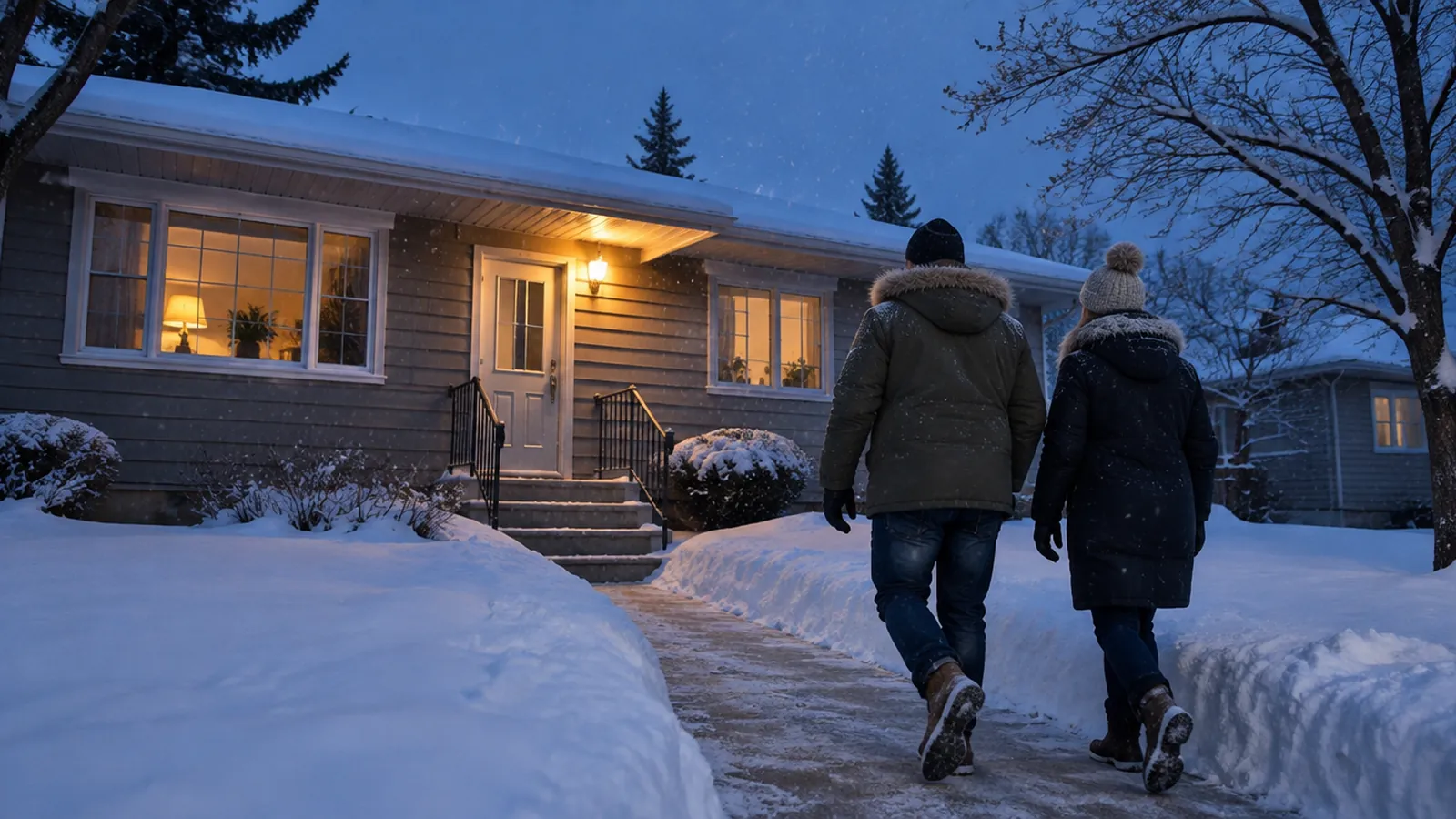
The short answer
Mostly people with a deadline: buyers moving here for work, first-time buyers with a lease ending, people who already sold and need somewhere to go. Last winter 4,003 homes sold in the City of Edmonton. Entry-level sales held up best: under $400,000, house sales were down only 22% from spring.
Key takeaways
- 4,003 homes sold in the City of Edmonton from November 2025 to February 2026, against 6,685 from March to June.
- Entry-level houses held up best. Under $400,000, house sales were down 22% from spring. Over $800,000, they were down 56%.
- Houses built in 2024 or later were 21.9% of winter house sales, against 14.7% in spring. Builders keep selling through winter.
- Alberta has gained people from other provinces for 20 quarters in a row, and many of them move on a job start date.
- Winter brings fewer showings, mostly from buyers with a reason to move. Flexible possession and easy remote viewing help.
How many people actually buy in an Edmonton winter?
Fewer than in spring, but a lot more than most sellers expect. From November 2025 to February 2026, 4,003 homes sold in the City of Edmonton. From March to June it was 6,685. December and January are the quiet months, and then February jumps.
| Month | Homes sold |
|---|---|
| Nov 2025 | 1,170 |
| Dec 2025 | 878 |
| Jan 2026 | 834 |
| Feb 2026 | 1,121 |
| Mar 2026 | 1,423 |
| Apr 2026 | 1,731 |
| May 2026 | 1,735 |
| Jun 2026 | 1,796 |
Source: Real Living analysis of City of Edmonton sales on the MLS® System. Houses, townhouses and apartment condos.
So roughly 830 homes changed hands in January, in the coldest, darkest weeks of the year. Every one of those had a buyer who went out in it to look.
What did winter buyers buy?
The mix of property types barely changes with the season. Houses were 65.8% of winter sales and 66.5% of spring sales. Condos and townhouses held their share too.
Price is where winter looks different. Sales at the top dropped off much more than sales at the bottom:
| Sale price | Nov 2025 to Feb 2026 | Mar to Jun 2026 | Winter vs spring |
|---|---|---|---|
| Under $400,000 | 500 | 638 | 22% fewer |
| $400,000 to $500,000 | 852 | 1,427 | 40% fewer |
| $500,000 to $650,000 | 795 | 1,397 | 43% fewer |
| $650,000 to $800,000 | 293 | 541 | 46% fewer |
| $800,000 and up | 195 | 440 | 56% fewer |
Source: Real Living analysis of City of Edmonton house sales on the MLS® System.
Under $400,000, house sales in winter were down only about a fifth from spring. Over $800,000, they were down by more than half. The median winter house sold for $495,000, against $511,000 in spring.
The other difference is age. Houses built in 2024 or later were 21.9% of winter house sales, against 14.7% in spring. Builders keep selling finished homes through the winter, and those homes show well in any season. If you’re selling in a newer neighbourhood, some of your competition is a builder’s quick-possession home down the street.
So who are these buyers?
Nobody records why a buyer bought, so I can’t give you percentages. What I can tell you is who I see out looking in January, after 23 years of doing this. Almost all of them have a date they’re working to.
- People moving here for work. Alberta has gained people from other provinces for 20 quarters in a row. In the second quarter of 2026 it added 5,893 people from elsewhere in Canada, more than any other province. Job start dates don’t wait for spring.
- First-time buyers with a lease ending. A lot of them have been watching for months, they’re pre-approved, and they know what a fair price looks like. That fits the under-$400,000 numbers.
- People who already sold. Someone who sold in the fall and has a possession date coming has to buy something. They can’t wait for the spring listings.
- People whose life changed. A separation, a new baby, a parent who needs to move closer. These buyers often need a specific kind of home in a specific area, and they need it soon.
What winter has fewer of is the people who are just seeing what’s out there. Open-house browsing drops off a cliff when it’s minus 25.
Why are winter buyers more serious?
Because looking at houses in January is unpleasant, and people don’t do unpleasant things for fun. The buyer who books a showing at 6 pm on a dark Tuesday usually has a reason to be there.
In practice that means fewer showings, and more of them from people who are ready. I can’t prove the second part with a number. Nobody tracks showings per offer across the city. But I’ve seen the pattern enough winters that I plan around it.
Serious doesn’t mean easy, though. These buyers have usually been watching the market for a while. They know what sold, and they’ve seen the same listings you’re competing with. A price that’s ahead of the market doesn’t get tested by a crowd in winter. It just sits.
What do winter buyers notice that spring buyers don’t?
They see the house at its worst, which is also when they’ll be living in it. A spring buyer walks through with the windows open. A January buyer stands in the front hall at minus 20 and feels whether it’s warm.
So the questions change. How old is the furnace, and when was it last serviced? Do the windows frost up on the inside? Is there ice building up along the eaves? How long does it take to warm up the car, and is the garage attached? What do the gas and power bills run in a cold month? In a condo, who clears the snow and how fast?
None of those are deal-breakers on their own. But a buyer who has to guess at the answers tends to guess the expensive way. Have them ready: the furnace receipt on the counter, a year of utility bills in the listing package, and an honest answer about anything that leaks, drafts or ices up. It’s much easier to talk about a 15-year-old furnace you’ve disclosed than one the inspector finds.
How do I set up my listing for winter buyers?
- Be flexible on possession. A relocating buyer may need a fast date. Someone who already sold may need a specific one. Being able to say yes to either is worth more in winter than in spring.
- Make it easy to buy from far away. A floor plan with measurements, a video walkthrough, recent utility bills, the furnace and roof ages, and a list of what’s been updated and when. Out-of-province buyers often decide on the first visit, and some send a family member or their agent in their place.
- Say yes to evening showings. Most winter showings happen after work, in the dark. Every light on, the house warm, a clear spot for boots.
- Know your competition, including builders. In newer areas, look at what builders are offering on finished homes near you. A buyer comparing your house with a new one will notice incentives and warranties.
- Price for the buyers who are actually out. The drop-off was steepest at the top. If your home is priced near the top of its area, expect a thinner pool in December and January.
Should I list for winter buyers or wait for spring?
If your home suits the people who buy in winter, there’s a good case for listing now. That means an entry-level house, a condo or townhouse in good shape, or a home with a flexible possession date that shows well inside. You’ll have fewer competing listings and buyers who mean it.
If your home is near the top of its market or its best feature is the backyard, February or spring is probably the better launch. Last winter, houses took a median 47 days to sell in January and 26 in February. My winter selling post has the full month-by-month numbers.
If your listing already sat through the fall, start with 90 days and no offers before you decide. And if you’re moving here yourself, my moving to Edmonton page is the place to start. Either way, a home evaluation based on this winter’s sales near you tells you what to expect.
Edmonton’s market right now
There are 5,417 homes competing for buyers in Edmonton today, at a median list price of $424,900 and a median of $296 per square foot.
| Price band | Listings | Share |
|---|---|---|
| Under $300,000 | 1,703 | 31% |
| $300,000 – $500,000 | 1,889 | 35% |
| $500,000 – $750,000 | 1,247 | 23% |
| $750,000 – $1M | 308 | 6% |
| $1M and up | 270 | 5% |
Source: Real Living’s CREA DDF® feed, active Edmonton residential listings as of 17 November 2026. Figures refresh several times a day; extreme outliers are excluded so a median reflects the real market. Search every listing.

Ryan McCann
Ryan McCann is one of Edmonton’s top REALTORS® with over 23 years of experience helping more than 2,200 buyers and sellers. His work spans every Edmonton neighbourhood and property type, bringing deep local market knowledge and practical guidance to buying or selling a home in Edmonton.
He has guided more than 2,200 buyers and sellers through Edmonton transactions, and prices listings from what is selling now rather than from what a seller hopes to get.
Contact Ryan today at 780-964-8445 to talk through your next step.
Reviewed 17 November 2026
Sources
ATB Financial, Alberta population update, 23 September 2026 (Statistics Canada data) — atb.com
REALTORS® Association of Edmonton, monthly market statistics — realtorsofedmonton.com
Sales figures are Real Living's analysis of City of Edmonton sales on the MLS® System, November 2025 to June 2026. Days on market count the selling listing only.
Frequently asked questions
Do people buy houses in Edmonton in winter?
Yes. From November 2025 to February 2026, 4,003 homes sold in the City of Edmonton, against 6,685 from March to June. December and January are the slowest months. Sales pick up again in February.
Who buys homes in winter?
Mostly people with a date to meet: buyers moving to Alberta for work, first-time buyers with a lease ending, people who already sold their home, and people whose family situation changed. Casual browsers mostly stay home.
Are winter buyers more serious than spring buyers?
Usually. Fewer people look at homes in winter, and the ones who do tend to have a reason and a timeline. They also know the market well, so a home priced ahead of recent sales tends to sit rather than draw offers.
Which homes sell best in an Edmonton winter?
Entry-level homes held up best last winter. City of Edmonton house sales under $400,000 were down only 22% from spring, against 56% fewer sales over $800,000. Homes that show well inside and allow a flexible possession date also suit winter buyers.
Your next step
Find out what your home is actually worth — and what you would net after fees — with a free, no-obligation evaluation.
Get a free home evaluationMore in Selling
 90 Days and No Offers: What Your Showings Are Telling You
 Off-Market vs. MLS in Edmonton: What Sellers Need to Know
 My Listing Expired. What Now? A Checklist for Edmonton Sellers
 Edmonton Expired Listings: How to Relaunch Successfully This Spring