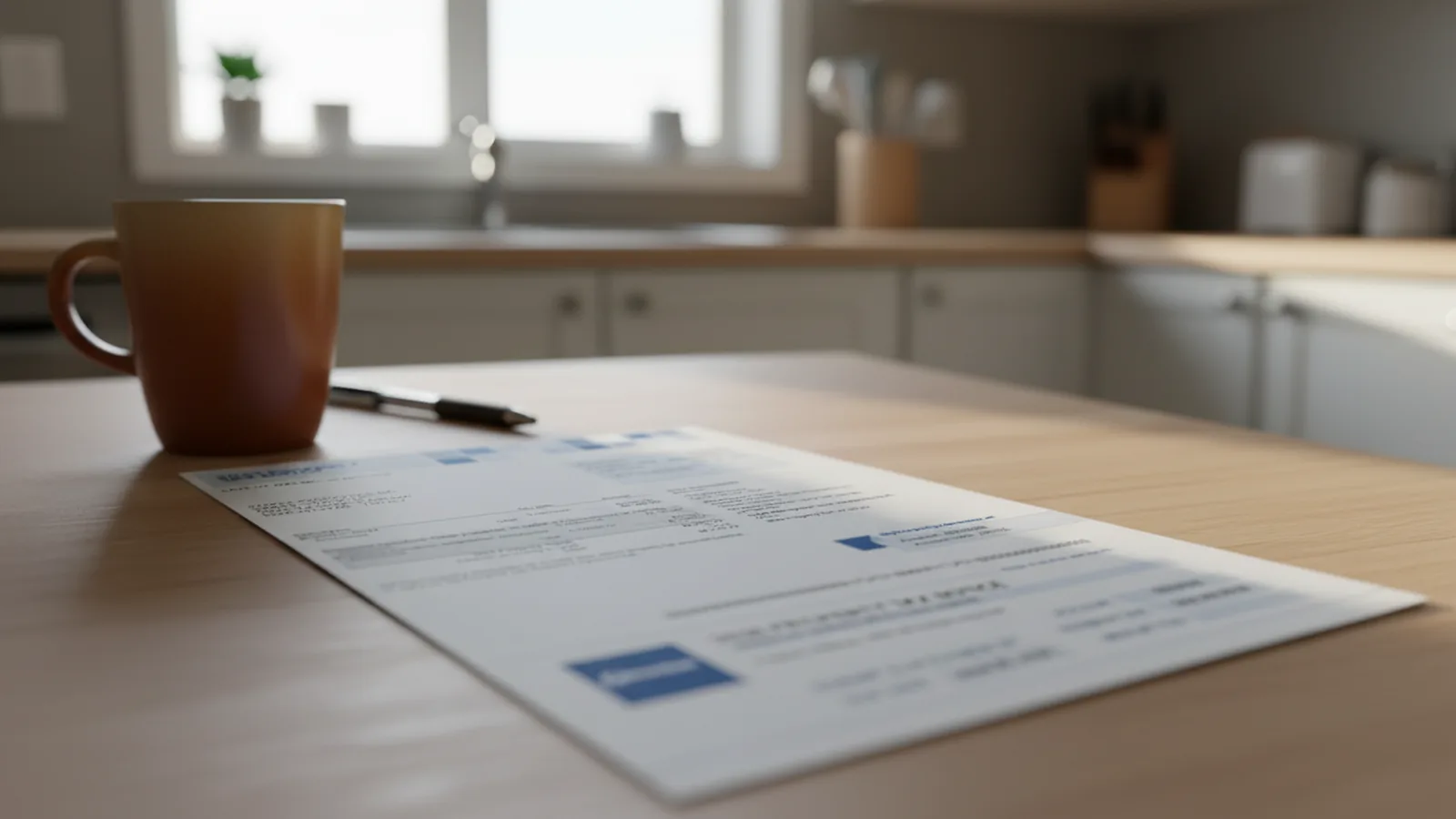
The short answer
Edmonton's draft budget proposes a 4.9% property tax increase for 2027, about $17.65 a month on a median home assessed at $492,500. Council votes by December 18. On its own the increase shouldn't change when you sell, because taxes are split at closing. It matters when it's one more cost on a budget that's already stretched.
Key takeaways
- The draft budget proposes 4.9% for 2027, then 4.7%, 4.5% and 3.9% through 2030, after a 6.9% increase in 2026. It isn't final until council votes.
- On a median $492,500 home, the City's portion rises from $317.74 to $335.39 a month, or about $212 a year.
- Your bill depends on how your assessment moved against the city average. 2027 assessment notices arrive in January.
- Property tax is split at closing on the statement of adjustments, so you only pay for the days you own the home.
- Selling to avoid the increase doesn't add up. Look at the whole monthly cost of the home, not one line.
How much is Edmonton’s property tax going up in 2027?
The City of Edmonton’s draft 2027–2030 budget, released November 2, 2026, proposes a 4.9% property tax increase for 2027. The plan then calls for 4.7% in 2028, 4.5% in 2029 and 3.9% in 2030. City administration had originally projected 5.6% for 2027 (Culture Alberta, citing the City’s budget).
That comes after a 6.9% increase council approved for 2026.
It is still a proposal. The public hearing is November 23. Council debates and votes between November 24 and December 18, the budget has to pass by December 31, and the new rates take effect January 1, 2027. The final number can change.
What does a 4.9% increase mean on my tax bill?
For a median Edmonton home assessed at $492,500, the City’s portion of the bill would go from $317.74 a month in 2026 to $335.39 in 2027. That’s $17.65 a month, or about $212 a year. Put another way, it’s about $3.58 a month more for every $100,000 of assessed value.
Three things change what you’ll actually pay:
- Your assessment. The 4.9% applies to the City’s total tax levy. If your home’s assessment rose faster than the city average, your bill goes up by more. If it rose slower, by less.
- The provincial education tax. The City collects it but doesn’t set it. It’s a separate line on the same bill.
- The final budget. Council can still move the number before December 18.
Your 2027 assessment notice arrives in January. Read it closely, because that value drives your share.
Will a property tax increase lower Edmonton home values?
On its own, probably not by much. An extra $17.65 a month isn’t what decides whether someone buys a house.
But property tax rarely arrives alone. Buyers in late 2026 are also dealing with a Bank of Canada rate increase in October, higher insurance and higher utility bills. Lenders count property tax when they work out how much a buyer can borrow, so every increase trims a little off what buyers can afford to pay.
The bigger effect is on owners. For a household that just renewed a mortgage at a higher rate, a tax increase is one more line on a budget that was already tight. That’s the group I hear from most right now, and it’s why I’m writing this. My post on mortgage renewal: stay, refinance or sell covers how to weigh the decision.
How are property taxes split between buyer and seller in Alberta?
You pay property tax for the days you own the home, and the buyer pays for the rest of the year. The lawyers sort it out on the statement of adjustments at closing.
- If you’ve already paid the year’s taxes, the buyer reimburses you for the days after possession.
- If you haven’t, you credit the buyer for your share up to possession day.
- If you sell early in the year, before the new tax bill is out, the lawyers usually adjust on an estimate. Ask your lawyer how they’ll handle it.
So a 2027 increase doesn’t follow you after you sell. You pay it only for the part of 2027 you still own the home. My post on closing costs in Alberta explains how tax adjustments work, with examples.
Should a property tax increase change when I sell?
Not by itself. Selling to avoid a $212-a-year increase would cost far more than it saves.
It’s worth a fresh look if the tax increase is the latest in a pile of rising costs, if you’re covering the monthly gap with a line of credit, or if the home is bigger than you need. In that case the question isn’t really the tax. It’s whether the house still fits your budget. My post on downsizing in Edmonton walks through when a smaller home makes sense.
If you do decide to sell, timing still matters more than the tax. My post on selling a house in Edmonton in winter shows how last winter’s sales compared with spring.
If you’re also weighing a move out of the city, Edmonton property tax vs St. Albert, Sherwood Park and Beaumont runs the same assessments through all four.
Where do I start?
Add up what the house costs you each month now: mortgage, property tax, insurance, utilities and upkeep. Then find out what it would sell for. An online home evaluation is a quick first look, and a full home evaluation gives you a number you can plan around. With both, you can decide on facts rather than headlines.
Edmonton’s market right now
There are 5,417 homes competing for buyers in Edmonton today, at a median list price of $424,900 and a median of $296 per square foot.
| Price band | Listings | Share |
|---|---|---|
| Under $300,000 | 1,703 | 31% |
| $300,000 – $500,000 | 1,889 | 35% |
| $500,000 – $750,000 | 1,247 | 23% |
| $750,000 – $1M | 308 | 6% |
| $1M and up | 270 | 5% |
Source: Real Living’s CREA DDF® feed, active Edmonton residential listings as of 17 November 2026. Figures refresh several times a day; extreme outliers are excluded so a median reflects the real market. Search every listing.

Ryan McCann
Ryan McCann is one of Edmonton’s top REALTORS® with over 23 years of experience helping more than 2,200 buyers and sellers. His work spans every Edmonton neighbourhood and property type, bringing deep local market knowledge and practical guidance to buying or selling a home in Edmonton.
He has guided more than 2,200 buyers and sellers through Edmonton transactions, and prices listings from what is selling now rather than from what a seller hopes to get.
Contact Ryan today at 780-964-8445 to talk through your next step.
Reviewed 17 November 2026
Sources
Culture Alberta, Edmonton's proposed 2027 budget, November 7, 2026 — culturealberta.com
City of Edmonton, Budget and finances — edmonton.ca
Bank of Canada, policy rate announcement, October 28, 2026 — bankofcanada.ca
Budget figures are proposals as of November 9, 2026 and may change when council votes. This article is general information, not tax or legal advice.
Frequently asked questions
How much are Edmonton property taxes going up in 2027?
The City's draft 2027–2030 budget proposes a 4.9% increase for 2027. On a median home assessed at $492,500, the City's portion would rise from $317.74 to $335.39 a month. Council debates and votes between November 24 and December 18, so the final number can change.
Who pays property tax when you sell a house in Alberta?
Both, for their own days. The seller pays for the part of the year they owned the home and the buyer pays for the rest. The lawyers settle it on the statement of adjustments at closing.
Should I sell my house because property taxes are going up?
Not because of the tax alone. About $212 a year on a median home is far less than the cost of selling. It's worth a look if the increase is one more cost on a budget that's already stretched, or if the home is bigger than you need.
Your next step
Find out what your home is actually worth — and what you would net after fees — with a free, no-obligation evaluation.
Get a free home evaluationMore in Selling
 Selling a House in Edmonton in Winter: What the Numbers Say
 Assessed Value vs Market Value in Edmonton: What's the Difference?
 Why Didn't My Edmonton Home Sell This Fall?
 My Listing Expired. What Now? A Checklist for Edmonton Sellers